Which Savoy cheese suits your taste and your recipe?
Choose a Savoy cheese based on how you plan to use it. Try Beaufort PDO for fondue, Reblochon de Savoie PDO for tartiflette, Raclette de Savoie PGI for raclette pans and Abondance PDO for berthoud. For a cheese board, pair a firm cheese such as Beaufort or Emmental de Savoie with Tomme de Savoie PGI or Tome des Bauges PDO. Add Chevrotin PDO if you enjoy goat’s cheese. Savoy’s cheesemaking sector has eight protected cheeses, five PDOs and three PGIs. Ask to taste a piece at the cheese counter. A young tomme can taste very different from a well-aged one. [1] [2] [3] [8]
Compare the eight Savoie PDO and PGI cheeses
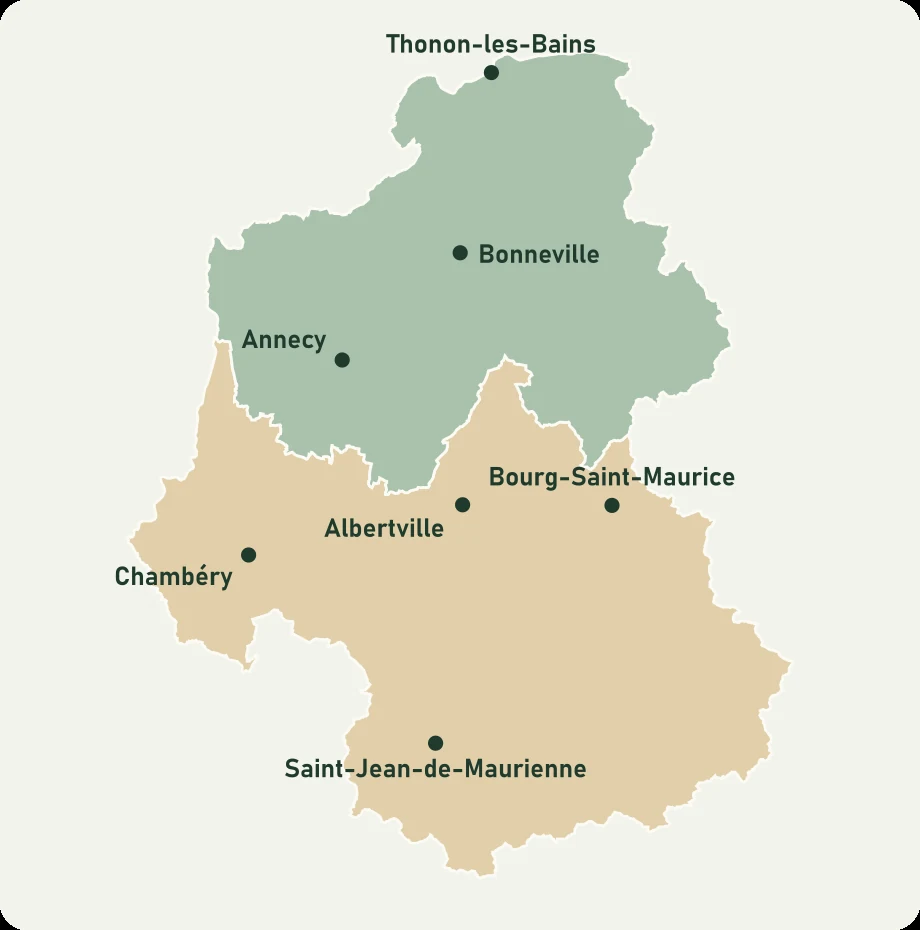
The five PDOs are Abondance, Beaufort, Chevrotin, Reblochon de Savoie and Tome des Bauges. The three PGIs are the Emmental de Savoie, the Raclette de Savoie and the Tomme de Savoie. The Guide to Savoy cheeses allows to situate these specialties in their territories. To decide what to buy, first compare the dough and the type of milk, then refine the available room. [1] [2]
| Cheese | Milk and type of dough | Profile and use |
|---|---|---|
| Beaufort PDO | Whole raw milk of cow, pressed dough cooked. | Supple, with buttery or fruity notes depending on the piece. Use in fondue or on a cheese board. Aged for at least five months. [3] |
| Abondance PDO | Cow’s raw milk, semi-cooked pressed cheese. | Soft, often fruity. To taste the cut or melt in a berthoud. [2] [8] |
| Reblochon de Savoie PDO | Whole raw milk of cow, uncooked pressed cheese with washed rind. | Unctuous, suitable for spread. Green pastille for the farmer and red for the slag. [2] [4] |
| Tome des Bauges PDO | Raw cow’s milk, uncooked pressed cheese. | An uneven grey rind and supple texture. Serve in wedges and compare it with Tomme de Savoie. Aged for at least five weeks. [5] |
| Chevrotin PDO | Whole raw goat milk, uncooked pressed cheese with washed rind. | Exclusively farm cheese. A piece of 250 to 350 g gives several parts to taste on a tray. [2] [6] |
| Tomme de Savoie PGI | Cow’s milk, uncooked pressed cheese. | Young and soft for aperitif, or more refined for a tray. Four weeks minimum ageing. [5] |
| Raclette de Savoie PGI | Raw or thermalized cow milk, uncooked pressed cheese. | Hot melt and spun. For pans, or to taste cold in thin slats. Eight weeks minimum ageing. [7] |
| Emmental de Savoie PGI | Raw cow’s milk, pressed dough cooked. | Soft, with large openings and a sweet and fruity taste. In dice or to give melt to a gratin. 75 days minimum ageing. [7] |
The PDO, or protected designation of origin, requires that all stages of production take place in the area defined according to the know-how described. For a PGI, or protected geographical indication, at least one step must take place in the area. Each specification can go further. For the Raclette de Savoie, milk production, processing and ageing all take place in the area of PGI. The logo informs about the origin and production rules. To know the strength of the cheese, rely on the piece you taste. [7] [9]
Choose according to taste and texture
For a sweet cheese
Start with the Emmental de Savoie if you are looking for a dough that is easily cut into dice, or with a young Tomme de Savoie if you prefer a more supple texture. A soft Beaufort is also suitable in fine slats. For a first tasting, taste on natural bread before adding charcuterie or condiments. [3] [5] [7]
For a fruity or more marked cheese
Abondance is a good starting point for looking for fruity aromas. A Beaufort summer allows you to compare another dough profile, with notes that vary according to season and piece. For a more marked flavor, ask to taste a more refined tomme or a farmer reblochon at a point. Compare first the intensity to the first contact, then the duration of the taste in the mouth. [2] [3] [4] [5]
For creamy cheese or a goat
Choose a soft Reblochon for a smooth cow paste. To change milk, take a Chevrotin, whose washed rind and goat’s milk give a different profile. At the counter, specify whether you are looking for cheese for the same evening or for the weekend. The seller will be able to direct you to a room ready at the time of service. [4] [6]
Choose according to the dish
| To prepare… | Cheese to choose from | Buying advice |
|---|---|---|
| Savoyard fondue | Beaufort PDO, alone or with Abondance and Emmental de Savoie. [3] | Buy an easy-to-cut dough and choose the dominant cheese by tasting it cold. |
| A spreader | Reblochon de Savoie PDO farmer or dairy, at point. [4] | For four people, plan an entire classic room for about 1 kg of potatoes. |
| A raclette | plain Raclette de Savoie PGI for a melting base. [7] | Ask for slices adapted to the pans or a portion compatible with the support of your device. |
| A Berthoud | Abondance PDO, with Savoy white wine in the traditional recipe. [8] | Choose a piece to detail in thin slats for an individual dish. |
| A crozet or vegetable gratin | Beaufort, Abondance or Emmental de Savoie. [2] [3] [7] | Taste the cheese to adjust the seasoning. Share it in the garnish and on top. |
| A picnic or an aperitif | Tomme de Savoie, Emmental de Savoie or Beaufort. [2] | Take a piece that cuts without crushing and keep it cool until service. |
To choose fondue pot cheese, the comparative Beaufort or Comté explains what changes between a Savoyard fondue and a fondue in the Comté. For oven or pan dishes, the guides What Reblochon for tartiflette? and What cheeses for a raclette? give the appropriate quantities and cuts.
Recognise a farm cheese
What does the word “farmer” guarantee?
In France, the name farm cheese is framed. The agricultural producer makes the cheese on his farm according to traditional techniques, with the milk of his own farm. The size of the farm, the appearance of the crust and the sale on a market are not enough to determine the method of manufacture. An external ageing in accordance with traditional uses is provided for by the Rural Code, with information from the consumer. Ask who made the cheese and where it has been refined. [10]
| What You See | What the indication tells you | What to check? |
|---|---|---|
| Farmer | The method of manufacture and the link between milk and the holding. [10] | The name of the producer and the place of ageing if you are interested. |
| Milk or fruit | For Reblochon, cheese can be made in cheese or co-operatives from milk from several holdings. [4] | The name of the PDO or PGI, the type of milk and ageing. The PDO dairy reblochon is also with raw milk. |
| PDO or PGI logo | Compliance with the specification of the protected name. [9] | The presence of the term “farmer” if you are looking for this method of manufacture. |
| Sold on the farm or market | The place of purchase. | The name of the chosen cheese manufacturer. A point of sale can offer several producers. |
Which specialties will you choose in the farm version?
The Chevrotin PDO is exclusively a farmer. For the Reblochon de Savoie PDO, the green pastille indicates the farm version and the red version of the dairy. The Abondance and the Tome des Bauges also exist in farm and dairy versions. The markings of colour and shape vary according to the cheese. Keep the name and the labels, especially if the pastille is on another portion of the mill. [2] [4] [5] [6]
If you want to buy directly from the manufacturer, the Savoie Cheese Road allows you to locate farms, workshops and cellars. In a cheese cooperative, ask which farms bring their milk and which cheeses are made on site. This information helps you to choose according to the place and mode of production you want to discover.
Read the label and buy the right quantity
- Name and sign of origin. Search for “Tome des Bauges PDO” with a single “m”, or “Tome de Savoie PGI” with two. A label indicating only “tomme” gives a last name of cheeses. [5] [9]
- Type of milk and treatment. Check whether it is cow’s milk or goat’s milk, and whether it is raw, thermalized or pasteurized depending on the product. Anses recommends that young children, pregnant women and immunocompromised people avoid cheeses with raw milk, except cooked pressed cheese. [7] [11]
- Refine and supple. Ask for a sweet, fruity or more full-bodied cheese. Indicate the dish and the day of consumption. If you hesitate, try two pieces of the same name. [2] [3]
- Weight and price per kilo. Compare equivalent sizes. A piece to the cut can be enough for two people. A small whole piece of Chevrotin can be interesting if you want to serve cheese on several occasions. [6]
- Storage. Follow the instructions of the seller or packaging. For a purchase on a trip, plan an insulated bag and consult the tips for carrying cheese and preserving cheese in the refrigerator. [12]
For a plate of three cheeses at the end of the meal, count about 40 to 60 g in total per person as a shopping spot. For four people, for example, ask for three pieces of 60 to 80 g, i.e. 180 to 240 g in total. If you buy a whole Chevrotin for the tray, take the necessary parts and keep the rest in the refrigerator. For a raclette or a fondue in main dish, calculate the amount according to the recipe and appetite of the guests.
When to buy a summer cheese or pasture cheese?
Beaufort Summer is made when cows are on pasture, from June 1st to October 31st. The Beaufort chalet d’alpage meets additional conditions, including the manufacture in a cottage above 1,500 meters with milk from a single herd. These mentions relate to the manufacture. With at least five months of ageing, a mill produced in summer can be eaten in winter or later. Ask for the season of manufacture and the age of the room at the counter. [3]
Discover local specialties
The selection of the eight PDOs and PGIs gives way to other discoveries. If you are looking for a local specialty to complete a tray, ask for the manufacturer’s name, the place of production and the type of milk. Compare the pieces according to the intended use.
- Manigodine is a speciality in the Manigod Valley, presented by the tourist office as a farm cheese with a circle of spices. Choosing to discover a supple cheese and another ageing profile. [13]
- Le Bleu de Termignon is a farm cheese from Haute-Maurienne with raw cow’s milk, whose parsley can develop naturally. Serve a small piece of Bleu de Termignon after the softer pieces. [14]
- The Persley of the Aravis is discovered at the cup. Ask to taste a piece of Persilla of the Aravis to compare its dough and its intensity with those of the Chevrotin.
- The serac allows to add a fresh texture to the tasting. The Serac guide explains its manufacture from the milk and how to serve it.
Compose a tray or gift
For three cheeses, choose a sweet Beaufort or Emmental, a Tomme de Savoie and a Chevrotin. For five cheeses, add a fruity Abondance and a soft Reblochon. To compare two products, serve the Tome des Bauges and the Tomme de Savoie side by side. First taste the pasta alone, then with some country bread. [1] [2] [12]
If the guests discover these cheeses, cut small portions first and indicate the name of each piece. A piece of Beaufort and a piece of Emmental offer a comparison of cooked pressed cheese. A Reblochon and a Chevrotin show what changes between two washed crusts made with different milks. Place the most assertive cheese at the end, after tasting the selection. [2] [6] [7]
For a gift to be transported, take two well-packed pieces and ask the seller for the storage conditions. Indicate the name, milk and original sign on a small card. If you offer an assortment to enjoy the same day, add a soft piece and propose to start with the sweetest cheese. The guide to compose a Savoyard cheese board details the quantities and the cut. For drinks, find the Savoie wine and cheese pairings. [12]
Frequently asked questions to choose a Savoie cheese
What are the eight Savoy cheeses PDO and PGI?
The five PDOs are Abondance, Beaufort, Chevrotin, Reblochon de Savoie and Tome des Bauges. The three PGIs are the Emmental de Savoie, the Raclette de Savoie and the Tomme de Savoie.
Which Savoie cheese do you choose if you like sweet tastes?
Try an Emmental de Savoie PGI, a young Tomme de Savoie or a soft Beaufort. Try the cheese maker if possible. Intensity varies especially with ageing.
Which Savoyard cheeses do you choose for a fondue, raclette and tartiflette?
Take Beaufort PDO for a fondue, Raclette de Savoie PGI for the stoves and Reblochon de Savoie PDO for a tartiflette.
What Savoie cheese do you need to buy for a berthoud?
Choose from the PDO Abondance. Berthoud is a traditional specialty guaranteed based on melted abundance, especially with Savoie white wine.
What difference between Tome des Bauges and Tomme de Savoie?
The Tome des Bauges is written with a single “m” and comes under an PDO from the Bauges massif. The Tomme de Savoie is written with two “m” and comes up with a separate PGI. Try the two side by side to compare their textures.
How do I recognize a farmer’s Reblochon?
Look for the green pastille and the word “farmer”. The red pastille corresponds to the Reblochon slag. Both versions of the Reblochon de Savoie PDO are made with raw milk.
Which Savoie goat cheese to choose for a tray?
Chevrotin PDO is a farm cheese with whole raw goat milk. A small part allows to diversify a plateau composed of cow’s milk cheeses.
What does the term “farm cheese” guarantee?
It indicates a production on the holding, according to traditional techniques, with the milk of that holding. If the ageing was carried out outside under the conditions laid down, the consumer must be informed of this.
What three cheeses to buy to discover Savoie?
Take a Beaufort PDO for cooked pressed cheese, a Tomme de Savoie PGI for uncooked pressed cheese and a Chevrotin PDO for goat milk.
Sources
- AFTAlp, the eight Savoy cheeses PDO and PGI.
- AFTAlp, pasta families and tasting tips and Abondance sheet.
- Beaufort Defence Union, Beaufort profiles and references, Fonde recipe and PDO unique document.
- Reblochon interprofessional union, differences between farmer and dairy and tartiflette recipe.
- AFTAlp, Tome des Bauges PDO and Savoie’s name PGI.
- Interprofessional trade union of Chevrotin, manufacture of Chevrotin PDO.
- Official Journal of the European Union, unique document of the Raclette de Savoie and AFTAlp, Emmental de Savoie PGI.
- INAO, recognition of Berthoud as a traditional specialty guaranteed.
- INAO, official signs of identification of quality and origin and Guide PDO and PGI.
- Legislation, Decree on cheeses and cheese specialities, Article 9-1 and Rural Code, article L641-19.
- Anses, recommendations on raw milk cheeses.
- Ministry of Agriculture, Cold Chain and AFTAlp, conservation and presentation of cheeses.
- Manigod Tourist Office, Manigodine Presentation.
- National Park of Vanoise, peculiarities of the Blue of Termignon.
- Administrative details, data.gouv.fr and Administrary breakdown, municipal centres.