
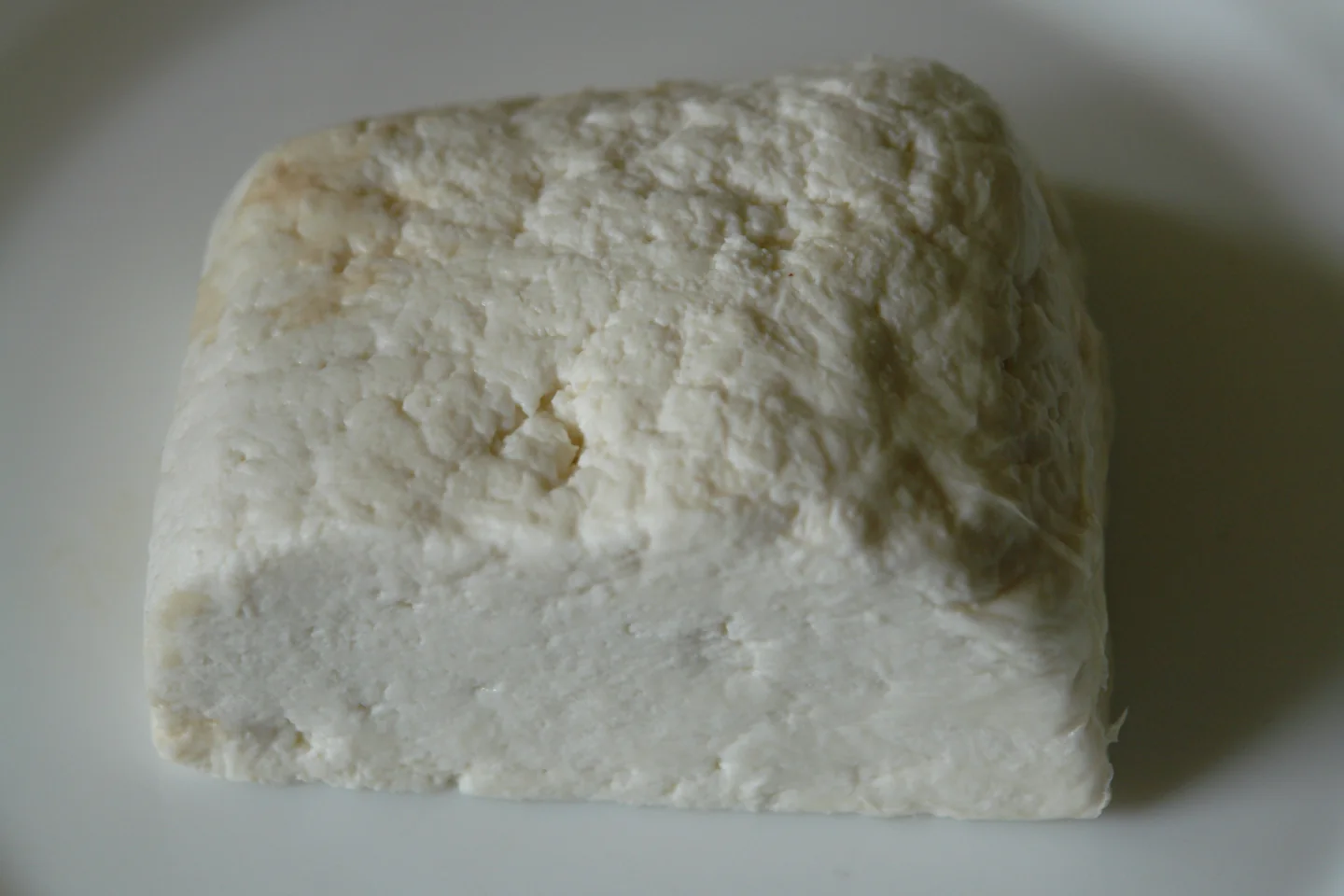
What is sérac?
Sérac is a fresh Alpine cheese made by heating whey, the liquid left after making another cheese. In Savoie it can be made from the whey left over from Beaufort. In the Bauges massif, there is also a goat’s milk sérac made with whey from goat’s milk tomme. Fresh sérac is white, rindless and mild. Serve it on a savoury slice of bread or with honey. [1] [2] [3]
Sérac at a glance
| Feature | What to look for |
|---|---|
| Origin | An Alpine speciality documented in Savoie and Haute-Savoie and also known in French-speaking Switzerland. [1] [4] |
| Main ingredient | Whey. It can come from cow’s or goat’s milk, depending on the cheese originally made. [1] [2] [3] |
| Appearance | Fresh sérac is white and rindless. Its texture ranges from soft to compact and can be slightly grainy. [1] [4] [5] |
| Flavour | Mild and milky. Salting and draining change the flavour and texture. [1] [2] |
| Composition | Fat and protein levels vary with the product, the draining process and any dairy ingredients added. Check the values per 100 g on the label. [1] [5] [6] |
| Designation | Sérac from Savoie has neither PDO nor PGI status. [7] |
The history of sérac, from mountain chalets to dairy cooperatives
Making sérac carries on the work begun when making a wheel of cheese. Once the curd was lifted out of the vat, cheesemakers could turn the remaining liquid into food to eat on site or take home to their families. A dairy survey from 1812 in the district of Bonneville already lists sérac among the affordable foods eaten by farm workers. In the Bauges, accounts collected by the Ministry of Culture recall the nickname “poor man’s cheese” and the use of whey from goat’s milk tomme. [2] [8]
The name also tells part of the story. The Académie française traces the French word sérac back to the 18th century and links it to serat in French-speaking Switzerland. The medieval Latin seracium comes from serum, meaning whey. [4]
The same principle is used in dairy cooperatives today. The Haute-Maurienne Vanoise dairy cooperative gives an approximate figure of 9 kg of whey for every 1 kg of Beaufort made. This is the amount of liquid left after making the first cheese. In Albertville, Savoie Lactée turns some of this whey into sérac and other dairy products. [3] [5]
How is sérac made from whey?
When milk coagulates, some of its components go into the curd and others stay in the whey. Making sérac recovers some of the proteins still in that liquid. Heat causes them to gather into white flakes, which the cheesemaker skims off and drains. [1] [2] [6]
- Heat the whey. The Franco-Italian Turismo del Gusto catalogue describes heating it to 85 to 95°C. In the Bauges, a cheesemaker describes a white layer forming as the whey approaches boiling point. [1] [2]
- Help the flakes form. Depending on the method, the cheesemaker may add diluted vinegar or aizy, whey from an earlier batch that has soured. [1]
- Skim and drain. The flakes are lifted out with a skimmer and placed in a mould. Sérac that still holds moisture is easy to mash. A well-drained piece is easier to slice. [1] [2] [5]
Does sérac have PDO or PGI status?
Sérac from Savoie has neither PDO nor PGI status. The Association des Fromages Traditionnels des Alpes Savoyardes represents eight protected cheeses, including five PDOs and three PGIs. Beaufort is one of them. Using whey from Beaufort to make sérac does not transfer the PDO to the fresh cheese. The Savoy cheeses guide covers both protected cheeses and specialities that belong to a local tradition. [6] [7]
What is the difference between sérac and ricotta?
Sérac and whey ricotta are both made by reheating whey. The Haute-Maurienne cooperative makes the same comparison in its profile of Beaufort sérac. The texture depends on how the cheese was drained. To replace ricotta in a filling, choose a soft sérac or mash a firmer one with a fork. [1] [3] [5]
The difference from Emmental de Savoie PGI lies in what goes into the mould. Emmental is made from curd and then aged. Fresh sérac is made by collecting the flakes that form in the whey and can be eaten after draining. [1] [10]
How to serve and cook with sérac
| Serving idea | Which texture to choose | How to prepare it |
|---|---|---|
| Savoury open sandwich | Soft | Mash with a fork and mix with chives, pepper and a little salt. |
| Salad or pan-fried dish | Firm and well drained | Cut into thick slices, brown briefly and add to the salad at the last moment. |
| Pasta, gratin or stuffed vegetables | Soft or crumbled | Mix with spinach or herbs to fill pasta or vegetables. |
| Breakfast or dessert | Fresh and soft | Spoon onto a plate with honey, jam or fruit. |
A moist, crumbly piece may break up in the pan. To serve it hot, crumble it over potatoes or stir it into a gratin. In the Bauges, goat’s milk sérac is traditionally served with potatoes seasoned with herbs. [2] [5]
Where to buy sérac and how to store it
- In Savoie or Haute-Savoie, ask cheesemongers, farms and cooperative shops if they sell fresh sérac. The Savoy Cheese Route helps you find shops and places to visit. Check availability before travelling. [1] [3] [5]
- At the cheese counter, ask what kind of milk the whey comes from and when the sérac was made. For pan-frying, ask for a piece that holds its shape. For a spread, choose a moister one.
- At home, refrigerate fresh sérac and follow the maker’s or cheesemonger’s instructions. For packaged cheese, follow the temperature and use-by date on the label. [9]
Frequently asked questions about sérac
Is sérac a cheese?
Yes. Sérac belongs to the whey cheese family. Heating recovers proteins from the whey, which are then drained.
Does sérac from Savoie have PDO or PGI status?
Sérac from Savoie has neither PDO nor PGI status. It can be made from Beaufort whey. The PDO applies to the Beaufort itself.
Is sérac always made with cow’s milk?
Cow’s milk whey is used for Beaufort sérac. In the Bauges massif, goat’s milk sérac is made from the whey left after making goat’s milk tomme.
What is the difference between sérac and ricotta?
Sérac and whey ricotta are made by reheating whey. The texture depends on the recipe and how the cheese is drained. A soft, fresh sérac can replace ricotta in a filling.
Can you brown sérac in a frying pan?
Yes. Cut a firm, well-drained piece into slices and brown them in the pan. Crumble a moister sérac over potatoes or into a gratin.
How long will fresh sérac keep?
It depends on how it was made and packaged. Keep sérac refrigerated and follow the use-by date and storage conditions on the label or given by the cheesemonger.
Sources
- Turismo del Gusto, description of sérac and how it is made
- Ministry of Culture, inventory of cheesemaking knowledge in the Bauges massif, p. 8
- Haute-Maurienne Vanoise dairy cooperative, uses for Beaufort whey
- Académie française, definition and etymology of sérac
- Savoie Lactée, sérac profile and culinary uses
- Légifrance, decree concerning cheese, article 5 on whey cheeses
- AFTAlp, PDO and PGI Savoy cheese sectors
- Savoie Department, historical study of food practices in the Savoy region, p. 33
- Ministry of Agriculture, storage conditions and use-by dates
- AFTAlp, characteristics and maturation of Emmental de Savoie PGI