What is Chevrotin PDO?
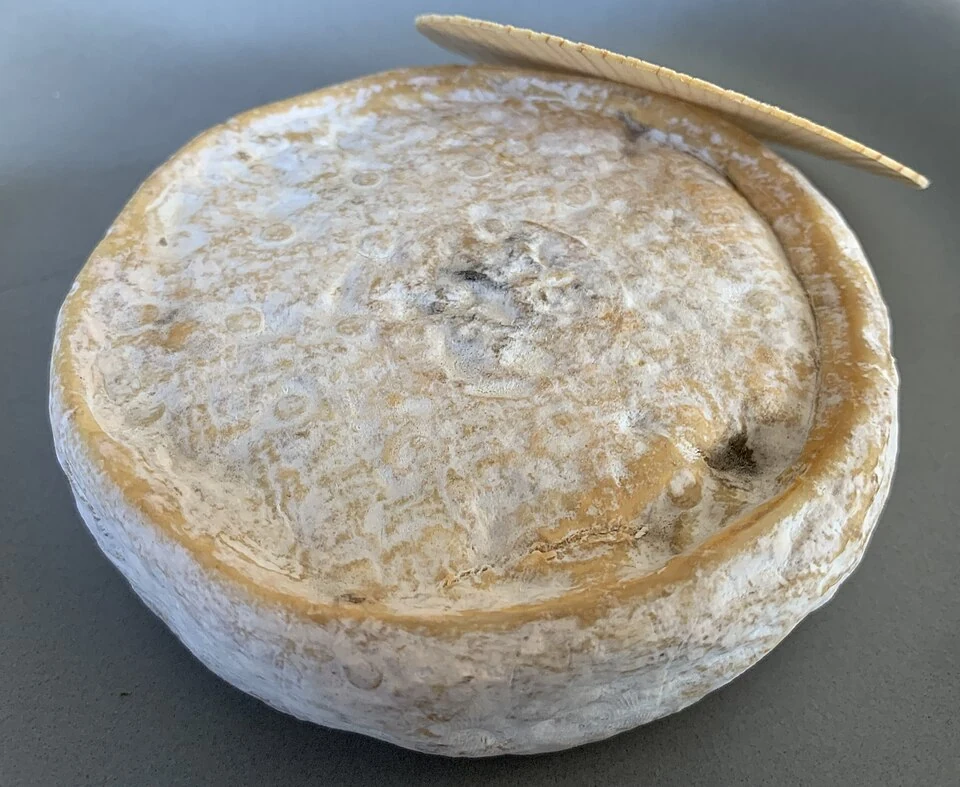
Chevrotin PDO is a farmhouse cheese made from whole raw goat’s milk in the mountains of Savoie and Haute-Savoie. This small disc weighs 250 to 350 g and has a soft, creamy uncooked pressed paste beneath a thin, slightly pink washed rind. Each producer makes the cheese from their own herd’s milk. Drying and maturation together take at least 21 days from the addition of rennet. [1] [2]
Chevrotin PDO at a glance
| Feature | Characteristics |
|---|---|
| Origin | Designated municipalities in the Aravis, Chablais and Mont Blanc areas of Haute-Savoie, and in the Bauges massif in Savoie. [1] [2] |
| Milk and production | Whole raw goat’s milk from the herd on the farm that makes the cheese. All production is farmhouse production. [1] |
| Size | A flat cylinder 9 to 12 cm across and 3 to 4.5 cm high, weighing 250 to 350 g. [1] |
| Rind | Thin and washed, with pinkish tones. A white bloom may cover all or part of the surface. [1] [2] |
| Paste and flavour | A cream-coloured, soft and smooth paste that can be firmer in the centre. The goat’s milk flavour can range from mild to more pronounced depending on the farm and how mature the cheese is. [1] [3] |
| Identification | A round translucent label gives the name “Chevrotin” and the producer’s number. The cheese is packaged whole with a small spruce board. [1] [4] |
The history of Chevrotin, a cheese of farms and mountain pastures
In the valleys of Savoie and Haute-Savoie, families long kept goats alongside cows. They made cheese from the goats’ milk on the farm and could take it with them or use it to pay part of the rent for their mountain pastures. The product specification mentions written references to Chevrotin as early as the 18th century, including leases that list the cheese among the payments due. [1] [5]
Chevrotin obtained French AOC recognition in 2002. An EU regulation dated 18 August 2005 registered the name as a PDO. The European Commission approved an amendment to the product specification in 2015. These dates trace how the name and cheesemaking practices came to be protected. [6] [7] [8]
The area includes valley meadows, mountain pastures and high Alpine grazing land. The herd may spend part of the grazing season at altitude. Farmers also cut meadows to make hay for the goats in winter. The Savoy Cheese Route helps you find farms and places to visit. [1] [5] [9]
What does the Chevrotin PDO guarantee?
The milk is produced in the designated area. Cheesemakers also make, mature and package the cheese there. Chevrotin is made on the farm from the milk of a single herd. The producer can mature the cheese or entrust it to an authorised affineur within the PDO area. [1] [2] [4]
- The goats. At least 80% of the goats in the herd must belong to the Alpine breed as defined in the specification, which includes the population known as the chèvre des Savoie. The threshold applies to the herd. [1]
- Feeding. Grazed grass and hay form the basis of the forage ration. The specification requires at least five months of grazing in the production area and at least 1,000 m² of pasture per goat. [1]
- Traceability. A casein label applied during moulding links each cheese to its producer. Operators record quantities and the origin of batches. Checks also cover the size, production stages and characteristics of the cheese after maturation. [1] [4]
The Savoy cheeses guide places Chevrotin among the other specialities and protected names of the two departments.
How is Chevrotin PDO made?
From raw milk to moulding
- Prepare the milk. The producer uses whole milk from their own herd. The producers’ association says that making one Chevrotin takes about 3 litres. If the milk is stored after milking, the specification limits this period to 14 hours. [1] [10]
- Set the milk. Adding rennet turns the milk into curd. The specification gives a setting time of 30 to 40 minutes at a temperature between 30 and 38°C. [1]
- Cut and lift the curd. The producer cuts and stirs the curd. Whey drains between the grains, and the curd is then lifted out by hand. [1]
- Mould and turn. The curd is divided into individual moulds lined with linen or cotton. The cloth helps it drain. The first turn follows filling, and the identification label is applied during moulding. [1] [10]
From pressing to maturation
- Press and salt. A weight is placed on each cheese for 6 to 12 hours. After draining, the cheese is either dry salted or brined. [1]
- Dry. The cheeses spend 5 to 9 days in a drying room on spruce boards. The producer turns them every day. [1]
- Wash the rind. At the end of drying, washing prepares the surface for the rest of maturation. The specification allows water, salted water or acidified whey. [1]
- Mature and package. In the cellar, the cheeses are tended by hand and turned at least three times a week. Drying and maturation together take at least 21 days from the addition of rennet. Each whole cheese is packaged individually with a small spruce board. [1] [2]
Washing and cellar care encourage the surface organisms that form the characteristic white bloom. As the cheese matures, the paste softens, sometimes first near the rind. A cut piece can therefore have a creamy edge and a firmer centre. [1] [2]
What is the difference between Chevrotin and Reblochon?
Chevrotin and Reblochon de Savoie PDO are both uncooked pressed cheeses with washed rinds. You can tell them apart by their milk, size and markings. [1] [11]
| Feature | Chevrotin PDO | Reblochon de Savoie PDO |
|---|---|---|
| Milk | Whole raw goat’s milk. | Whole raw cow’s milk. |
| Production | Always made on the farm from its own herd’s milk. | Made either on the farm or in a dairy. |
| Identification | Round translucent label showing the producer’s number. | Green label for farmhouse production and red for dairy production. |
| Size | 250 to 350 g. | 450 to 550 g for the standard size. Petit Reblochon also carries the PDO. |
How to choose, serve and store Chevrotin
- When buying. Look for the name “Chevrotin” and the European PDO logo on the packaging. If buying at the farm or a cheese counter, ask which farm it came from and how long it was matured. The producers’ directory lists farms and places to buy the cheese. [4] [9]
- On a cheese board. Cut a wedge from the centre to the rind to appreciate the texture. Serve with country bread. Fir honey goes well with a piece that has a pronounced goat’s milk flavour. [3] [12]
- With a Savoy wine. The producers’ association suggests a white wine made from Jacquère. Its freshness goes well with the creamy paste while letting the cheese’s flavour come through. [13]
- To store it. Keep the cheese refrigerated at the temperature and until the date on the packaging. For cheese bought directly from a farm, follow the producer’s instructions. [14]
Frequently asked questions about Chevrotin PDO
Where is Chevrotin PDO made?
The production area covers mountain municipalities in the Chablais, Aravis and Mont Blanc areas of Haute-Savoie and the Bauges massif in Savoie.
Is Chevrotin PDO always made on the farm?
Yes. Each Chevrotin is made on the farm from whole raw milk from its own herd. Maturation can be entrusted to an authorised affineur within the designated area.
How long is Chevrotin matured?
Drying and maturation together last at least 21 days from the addition of rennet. The cheese spends 5 to 9 days in the drying room before the rind is washed, and maturation continues in the cellar.
How do you recognise Chevrotin PDO?
It is a small round cheese weighing 250 to 350 g, with a thin rind that often has a white bloom. The PDO logo is on the packaging. On the rind, a round translucent label shows the name of the cheese and the producer’s number.
What is the difference between Chevrotin and Reblochon?
Chevrotin is made from raw goat’s milk and always on the farm. Reblochon is made from raw cow’s milk, either on the farm or in a dairy. Both are uncooked pressed cheeses with washed rinds.
What goes well with Chevrotin PDO?
Serve Chevrotin in wedges with country bread or a little fir honey. If serving it with white wine, a Savoy Jacquère goes well with its creamy paste.
Sources
- Ministry of Agriculture, approved Chevrotin PDO product specification
- INAO, Chevrotin PDO product profile
- Chevrotin producers’ association, appearance and characteristics
- Chevrotin producers’ association, identification and what the designation guarantees
- Chevrotin producers’ association, history and production area
- Légifrance, decree of 2 May 2002 recognising the Chevrotin AOC
- EUR-Lex, 2005 EU regulation registering the Chevrotin PDO
- EUR-Lex, amendment to the product specification approved in 2015
- Chevrotin producers’ association, map of producers and shops
- Chevrotin producers’ association, stages of cheesemaking
- Ministry of Agriculture, Reblochon de Savoie PDO specification
- Chevrotin producers’ association, pairings with honey and jam
- Chevrotin producers’ association, pairings with Savoy wines
- Ministry of Agriculture, storage conditions for fresh food