What is Persillé des Aravis?
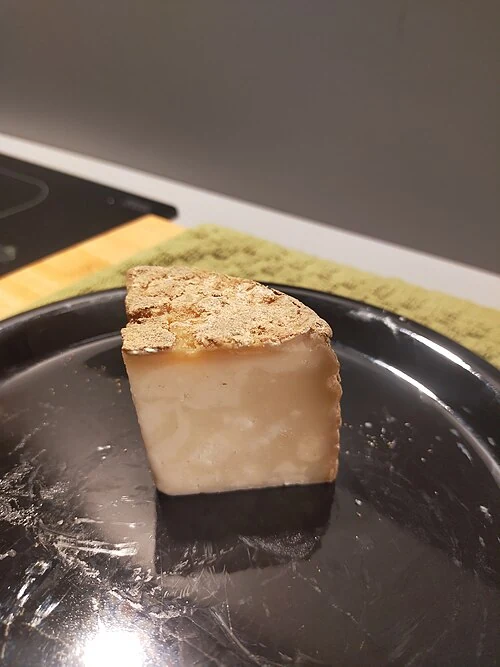
Persillé des Aravis is an Alpine farmhouse cheese made with whole raw goat’s milk in the Aravis massif. It comes in a small cylinder with a white to beige paste that is often firm and crumbly. Fine blue veins can develop naturally during maturation. Some pieces stay pale. The name refers to a local speciality with neither PDO nor PGI status. [1] [2] [3]
Persillé des Aravis at a glance
| Feature | What to look for |
|---|---|
| Origin | The Aravis massif, around Thônes and Le Grand-Bornand in Haute-Savoie. The speciality is also documented on the Savoie side, at La Giettaz. [1] [4] [5] |
| Milk | Whole raw goat’s milk in the methods described by the Thônes tourist office and cheesemonger Léon Rey. [1] [2] [6] |
| Shape and weight | A cylinder taller than it is wide. The Thônes tourist office gives 400 to 600 g. Slow Food’s inventory describes pieces weighing 600 to 900 g. [1] [2] |
| Rind | Grey at first, sometimes with patches of pale bloom. It can thicken and turn brown over time. [1] [2] |
| Paste and flavour | Pale, grainy and often crumbly. The milky and goat’s milk notes grow more pronounced with maturation. [1] [2] [7] |
| Blue veining | Blue marbling can develop in the cellar, particularly with longer maturation. It varies from one piece to another. [1] [2] |
| Designation | A farmhouse speciality with neither PDO nor PGI status. The name “Persillé des Aravis” and the variant “Persillé de Thônes” do not appear in the European register of geographical indications. [3] [8] |
A history tied to the Aravis farms and Alpine pastures
On mountain farms, a small herd might give too little milk at one milking to make a cheese. Combining curd from several milkings made it possible to produce a piece large enough. Slow Food describes an old practice of adding the day’s curd to curd already set aside with whey. This explains why working curd over several days has a place in the tradition of Persillé des Aravis. [2] [7]
The cheese belongs to the goat farming tradition around Thônes and Le Grand-Bornand. Androuet also records that some makers used to blend goat’s and cow’s milk. The examples described today by cheesemonger Léon Rey and the tourist office use raw goat’s milk. The available sources do not give a precise date for the appearance of this cheese. [1] [4] [6] [7]
At La Giettaz, Ferme des Violettes lists Persillé des Aravis among its goat’s cheeses. At Le Bouchet-Mont-Charvin, Chèvrerie de Lily makes it alongside Chevrotin PDO. These two examples show that farmhouse production continues on several sides of the massif. [5] [9]
How is Persillé des Aravis made?
- Combine several batches of curd. In the method used by Édouard Conus and described by Léon Rey, curd from two consecutive milkings is combined and heated together. Other accounts describe pooling it over several days. [2] [6]
- Crumble and shape. The drained curd is crumbled and gathered into a mould. Technical accounts describe working the curd by hand and draining it again to help the cylinder hold its shape. [2] [8] [10]
- Tend the cheese in the cellar. The affineur Histoires et Fromages describes using spruce boards, rubbing the cheeses and turning them. This care helps the rind thicken and the texture develop. [7]
Why do some pieces stay pale?
The coloured veins can form in the paste during maturation. For traditional Persillé des Aravis, the Thônes tourist office and Slow Food inventory describe blue veining that develops spontaneously, without piercing the cheese to let air in or adding mould to produce the marbling. A piece can therefore stay pale even when it comes from an established producer. [1] [2]
The name persillé refers to the marbled appearance. When you buy it, the seller can show you the cut and tell you how long the cheese has been in the cellar. The number of veins varies between pieces, and their presence alone tells you little about the strength of the flavour. [1] [2] [7]
How long is Persillé des Aravis matured?
The time varies with the farm, the affineur and the result they are looking for. Androuet describes about two months of maturation. Histoires et Fromages offers pieces aged three to six months. Slow Food’s inventory mentions maturation that sometimes exceeds six months. These are examples from producers and affineurs, with no common minimum set by a PDO or PGI. [2] [3] [4] [7]
For a texture that still has milky qualities and a milder goat’s milk flavour, ask for a younger cut. For a stronger flavour, ask for a piece matured for longer. The rind thickens and darkens with time, and older pieces can become more crumbly. [1] [2] [7]
How does it differ from Chevrotin and Bleu de Termignon?
| Cheese | Milk and origin | How to tell it apart |
|---|---|---|
| Persillé des Aravis | Raw goat’s milk, Aravis massif. | A cylinder with a crumbly paste. Blue veining can develop naturally during maturation. [1] [2] |
| Chevrotin PDO | Raw goat’s milk, designated area in Savoie and Haute-Savoie. | A small farmhouse disc with a washed rind and a supple paste. Its specification defines the shape and cheesemaking stages. [11] |
| Bleu de Termignon | Raw cow’s milk, Haute-Maurienne. | A farmhouse cheese with naturally occurring blue veins and a grainy paste. [12] |
The Savoy cheeses guide places Persillé des Aravis alongside the goat’s cheeses and other specialities of the two departments.
Where to buy Persillé des Aravis and how to serve it
- At the farm. Ask producers whether a piece is available and how long it has been matured. The Savoy Cheese Route helps locate farms and dairies. Ferme des Violettes and Chèvrerie de Lily are among the producers who describe this speciality. [5] [9]
- At the cheese counter. Ask where the cheese comes from, what milk it is made with and how old it is. To get a sense of its texture, choose a cut that runs from the centre to the rind and allow a small portion. [1] [6] [7]
- On a cheese board. Serve it in pieces with country bread. A pear or a few walnuts go well with a stronger piece. If tasting several cheeses, serve the most mature Persillé after the milder cheeses.
- After buying. Refrigerate according to the seller’s instructions or the label. Take out only the amount you plan to serve. [13]
Frequently asked questions about Persillé des Aravis
Where is Persillé des Aravis made?
It is associated with the Aravis massif, especially around Thônes and Le Grand-Bornand in Haute-Savoie. Farms on the Savoie side, such as at La Giettaz, also make it.
What milk is Persillé des Aravis made from?
The current methods described by the tourist office and the cheesemakers cited use whole raw goat’s milk. Historical accounts also record blends of goat’s and cow’s milk.
Why can Persillé des Aravis have no blue veins?
Blue veining develops naturally during maturation. The traditional method in the sources does not force the process by piercing the cheese or adding mould. Some pieces therefore stay pale.
How long is Persillé des Aravis matured?
The sources describe anywhere from about two months to more than six months, depending on the affineur. A piece matured for longer usually has a thicker rind and stronger flavour.
Does Persillé des Aravis have PDO or PGI status?
It is a mountain farmhouse speciality with neither PDO nor PGI status. The producer’s and affineur’s names can tell you where the cheese came from and how it was matured.
How does Persillé des Aravis differ from Chevrotin PDO?
Both are farmhouse goat’s cheeses. Persillé des Aravis comes in a cylinder, and its crumbly paste can develop marbling in the cellar. Chevrotin PDO is a flatter disc with a washed rind and a supple paste.
Sources
- Thônes Cœur des Vallées Tourism Office, Aravis cheeses and Persillé
- Slow Food Foundation, Ark of Taste inventory, Persillé des Aravis, with a French entry on the page
- European Commission, eAmbrosia register of geographical indications
- Cheesemonger Androuet, origin, milk types and maturation of Persillé des Aravis
- Ferme des Violettes, farmhouse production at La Giettaz
- Cheesemonger Léon Rey, how Édouard Conus makes Persillé des Aravis
- Histoires et Fromages, size and maturation of Persillé des Aravis
- Fr(h)ommages, technical profile for Persillé des Aravis or Persillé de Thônes
- Le Panier des Aravis, profile of Chèvrerie de Lily
- Toulouse National Veterinary School, example of how Persillé des Aravis is made, table 13
- Ministry of Agriculture, Chevrotin PDO product specification
- Vanoise National Park, characteristics of Bleu de Termignon
- Ministry of Agriculture, storing fresh foods