What are Savoy’s PDO and PGI cheeses?
Savoy’s cheesemakers produce eight cheeses with protected geographical names. The five PDOs are Abondance, Beaufort, Chevrotin, Reblochon or Reblochon de Savoie, and Tome des Bauges. The three PGIs are Emmental de Savoie, Raclette de Savoie and Tomme de Savoie. A PDO ties every production stage to a defined area. A PGI requires at least one stage to take place in the area. The specifications for these three cheeses go further and require milk production, cheesemaking and ageing to take place within their respective areas. [1] [2] [8] [9] [10]
Compare Savoie’s eight cheeses
The milk and the type of dough give a first mark. Chevrotin is the only one of the eight made with goat’s milk. The other seven are cow’s milk. Beaufort and the Emmental de Savoie are cooked pressed cheese, the Abondance is a semi-cooked pressed cheese and the other five are uncooked pressed cheese. The Savoie cheese guide places the specialties in their terroir. [1] [3] [4] [5] [6] [7] [8] [9] [10]
| Cheese and sign | Milk and family | Check to recognize him. |
|---|---|---|
| Abondance PDO | Whole raw cow milk, semi-cooked pressed cheese. | Concave heel wheel. 100 days minimum ageing. [3] |
| Beaufort PDO | Whole raw milk of cow, pressed dough cooked. | Wheel of 20 to 70 kg, with concave heel. Five months minimum ageing. [4] |
| Chevrotin PDO | Whole raw goat milk, uncooked pressed cheese with washed rind. | Small farm cheese from 250 to 350 g. [5] |
| Reblochon de Savoie PDO | Whole raw milk of cow, uncooked pressed cheese with washed rind. | Green pastille for the farmer and red for the slag. [6] |
| Tome des Bauges PDO | Raw cow’s milk, uncooked pressed cheese. | Grey textured rind. Five weeks minimum ageing. [7] |
| Emmental de Savoie PGI | Raw cow’s milk, pressed dough cooked. | Wheel of at least 60 kg after ageing and large openings in the dough. [8] |
| Raclette de Savoie PGI | Raw or thermalized cow milk, uncooked pressed cheese. | Soft and hot-spun paste. Eight weeks minimum ageing. [9] |
| Tomme de Savoie PGI | Raw or thermalized cow milk, uncooked pressed cheese. | Grey to white grey crust. 30 days minimum ageing. [10] |
The minimum times help to understand the manufacture. To choose a piece, also ask for the actual age of the piece and taste it if possible. A longer refined cheese can offer more persistent aromas, with differences depending on the cellar and the manufacture. To decide according to the taste and the intended dish, consult Choose Savoie cheese. [11]
Understand what the PDO, the OCA and the PGI guarantee
| Sign | What it means | What to remember for these cheeses |
|---|---|---|
| PDO | The production stages take place in the defined area. The characteristics of the product are related to the medium and the know-how. | For Bauges, milk, manufacture and ageing are attached to the Bauges area. [2] [7] |
| AOC | The designation of controlled origin. It is the French recognition that precedes the European registration in PDO for these products. | An ancient source can speak of Beaufort AOC. On products marketed today under the European name, look for the sign PDO. [2] |
| PGI | Protected geographical indication. A quality, reputation or other characteristic is linked to origin and at least one step takes place in the area. | For the Emmental, the Raclette and the Tomme de Savoie, the specifications place the three steps in the specific area of each PGI. [2] [8] [9] [10] |
The rules apply to the product bearing this name, from the origin of the raw materials to the manufacturing or ageing practices described in the specifications. The logo helps to identify the origin and compliance with these rules. To find a sweet or full-bodied taste, ageing and tasting remain the most direct reference. [2] [11]
Can an PGI cover as many steps as an PDO?
The Raclette de Savoie PGI gives an example. Its area includes the two Savoyard departments and the municipalities of Isere and Ain. Milk must be produced there and the cheese must be made there and then refined. The PGI is based on the link between origin and a quality, reputation or characteristic of the product. The PDO is based on a closer link between the qualities of the product and the natural and human factors of its area. The number of stages carried out on site is therefore not sufficient to distinguish the two signs. [2] [9]
Discover the five Savoyard PDOs
Abondance PDO, the semi-cooked dough of Chablais
Abondance is made with whole raw cow milk. Its cheese wheel has a concave heel and a crust that goes from golden yellow to brown. The supple cheese can develop fruity notes or hazelnut depending on the piece. Berthoud, recognized as a traditional specialty guaranteed, uses melted abundance including Savoie white wine. In this case, the PDO protects cheese and STG frame the recipe. [3] [12]
Beaufort PDO, from the valley to the mountain chalet
The Beaufort is a cooked pressed cheese whose wooden circle gives the cheese wheel its concave heel. The field distinguishes the name Beaufort and the summer mentions and chalet d’alpage. The Beaufort summer is made during grazing period, from June 1st to October 31st. The Beaufort chalet d’alpage meets additional conditions, including the manufacture above 1,500 meters, with the milk of a single herd, after the milking. For a tray, ask to taste a soft room and a summer room. For the kitchen, find What cheeses for a fondue?. [4]
Chevrotin PDO, the farm goat with washed rind
The Chevrotin is made on the farm and by hand with whole raw goat milk. Its paste is pressed uncooked. After ageing, the washed rind can carry a thin white cover. Drying and ageing together last at least 21 days from the time of boiling. On a tray, a small part allows to compare the taste of goat milk to that of a cow’s head. [5]
Reblochon PDO, two colors for two manufacturing modes
The green pastille identifies the farmer’s Reblochon, made on the farm with the milk of a single herd. The red identifies the dairy Reblochon, manufactured in cheese or co-operative with milk from several farms. Both versions use whole raw milk. For tartiflette, ask for a soft and ready-to-cook piece. The guide What Reblochon for tartiflette? details the sizes and the cut. [6]
Tome des Bauges PDO, cheese in name at a single “m”
The Tome des Bauges comes from the Bauges massif, between Savoie and Haute-Savoie. It refines on un planed spruce boards. Its cylinder measures 18 to 20 cm in diameter and weighs 1.1 to 1.4 kg at the end of ageing. Its grey and irregular crust helps to spot it. To distinguish the name and characteristics of the Tomme de Savoie, see Tome or Tome. [7]
Discover the three Savoyard PGIs
Emmental de Savoie PGI, the great grinding with “eyes”
The Eminal de Savoie is made with raw cow’s milk. The large openings in its paste are called eyes. The unique document indicates a diameter of 72 to 80 cm and a refined weight of at least 60 kg. The line indicates 75 days minimum ageing. Its soft and fruity paste is suitable for gratins, croques and fondue blends. [8]
Raclette de Savoie PGI, a hot-salting paste
The specifications allow raw or thermalised milk. The cheese is cold firm. Heated, its paste becomes melted and spun. The round cheese wheel is 28 to 34 cm in diameter. At the radius on the cut, ask for slices adapted to the appliance or a portion to scrape if the support allows. For variations and quantities, find What cheeses for a raclette?. [9]
Savoie PGI Tomm, two formats and a grey crust
The Tomme de Savoie is made from raw or thermalized cow milk. The current size weighs 1.2 to 2 kg, and the small size 400 to 900 g. The PGI’s area includes Savoie and Haute-Savoie, as well as the delimited communes of Ain and Isère. For an aperitif, look for a soft room. For a tray, compare a young tomme and a more refined one. [10] [11]
Check the origin and read a label
- Read the full name. To find the protected name, look for, for example, “Raclette de Savoie” or “Tomme de Savoie”. The word “raclette” or “tomme” alone refers to a family or use.
- Find the logo. The European PDO logo is red and yellow. The PDO logo is blue and yellow. On prepackaged products marketed under a protected EU name, look for the name and symbol in the same visual field.
- Check the type of milk. For products whose specifications allow several treatments, read the specific mention for the cheese sold. A cooked pressed cheese indicates that the curd was heated during the manufacturing process.
- Ask what a tablet means. On the Reblochon, the color indicates the method of manufacture. A portion at the cut can be taken away from the tablet. The poster or the seller can confirm its origin. [2] [6] [9] [10]
What to check on a product that contains cheese?
A prepared dish can cite a protected cheese as an ingredient. If a gratin indicates “to the Raclette de Savoie PGI”, the indication refers to the cheese used. Read the list of ingredients to know what the dish contains. On a piece sold as a cheese, look for the registered name and its symbol. A mountain image or a mention as “savoyard way” informs you about the presentation or style of the recipe. [2]
A cheese from the region can also be part of the local heritage outside of this list of eight. The Bleu de Termignon and serac offer two examples with very different textures. To discover the workshops, farms and cellars that receive from the public, consult the Route des cheeses de Savoie. The summary of guides brings together the tips for buying, cooking and tasting. [1]
Understanding the role of controls
The rules of each name are set out in a specification. Depending on the product, the product lays down the conditions for rearing, the types of milk allowed, the characteristics of the mill and ageing. A control plan specifies the points checked, the operators concerned and the details of the checks. [2] [13]
- Operators shall carry out the self-checks provided for in their activities.
- The defence and management body shall organize the internal controls provided for in the plan.
- The approved inspection body shall carry out external checks. Depending on the name, product reviews may complement the documentary or on-site checks. [13]
In practice, the checks make it possible to check that the protected name corresponds to the product sold. The eight cheeses keep different profiles. To compare dough, milk and table ageing, find the guide to compose a Savoyard cheese board.
Frequently asked questions about Savoie PDO and PGI cheeses
What are Savoie’s five PDO cheeses?
Abondance, Beaufort, Chevrotin, Reblochon or Reblochon de Savoie and Tome des Bauges are the five PDOs in the Savoyard sector.
What are Savoie’s three PGI cheeses?
The three IGPs in the sector are L’Emmental de Savoie, the Raclette de Savoie and the Tomme de Savoie.
What is the difference between PDO and PGI for a cheese?
The PDO links all stages of production to a defined area. PGI requires at least one and may provide for more precise rules. The three PGIs in the Savoyard sector place milk production, manufacturing and ageing within their respective areas.
Do AOC and PDO mean two different cheeses?
The AOC corresponds to the French recognition which precedes the registration of the name in PDO at European level. A historical source can therefore speak of an AOC cheese whose name is now protected in PDO.
Is the Savoie PGI still with raw milk?
Its specifications allow raw or thermized milk of cow. Check the mention of the milk treatment on the label of the product you buy.
Which goat cheese wears an PDO in this selection?
Chevrotin is the only goat’s milk cheese among the eight. It is made on the farm with whole raw goat milk.
What difference between Tome des Bauges PDO and Tomme de Savoie PGI?
The volume of the Bauges is written with a single “m” and comes from the area of the Bauges massif. The Tomme de Savoie is written with two “m” and comes under an PGI which is more extensive.
How do I check that a cheese bears the announced sign?
Look for the full name and the corresponding European symbol. For a serving at the cut, check the poster or ask the seller for the exact name and original information.
Sources
- AFTAlp, the eight Savoy cheeses PDO and PGI.
- European Union, Geographical Indications Regulation, Articles 26, 27, 37 and 46, INAO, PDO and AOC and logos of official signs.
- Official Journal of the European Union, single document of Abondance PDO and AFTAlp, profile of Abondance.
- Official Journal of the European Union, unique document of Beaufort PDO and Beaufort Defence Union, mentions and manufacturing season.
- INAO, Chevrotin PDO and Interprofessional trade union of Chevrotin, manufacturing.
- INAO, Reblochon or Reblochon de Savoie and Reblochon interprofessional union, farm and dairy versions.
- Ministry of Agriculture, specification of the Volume of Bauges PDO.
- Official Journal of the European Union, Single Document of the Emmental de Savoie PGI and AFTAlp, characteristics and ageing.
- Official Journal of the European Union, unique document of the Raclette de Savoie PGI.
- Official Journal of the European Union, Single Document of the Tomme de Savoie PGI and INAO, format presentation.
- AFTAlp, pasta families, tasting and ageing.
- INAO, Berthoud’s recognition in traditional specialty guaranteed.
- INAO, control procedures and control plan and types of control.
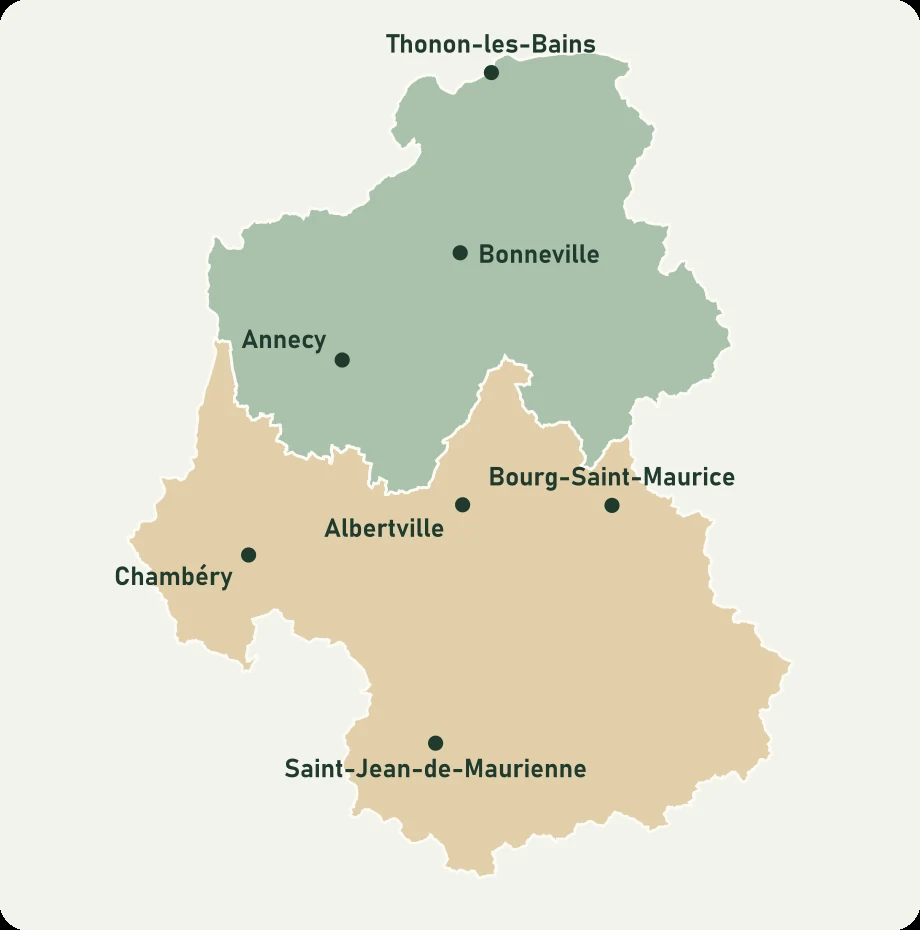
- Map data, administrative contours and Administrative decoupling API, municipal centres.