What is a Savoy terroir guide?
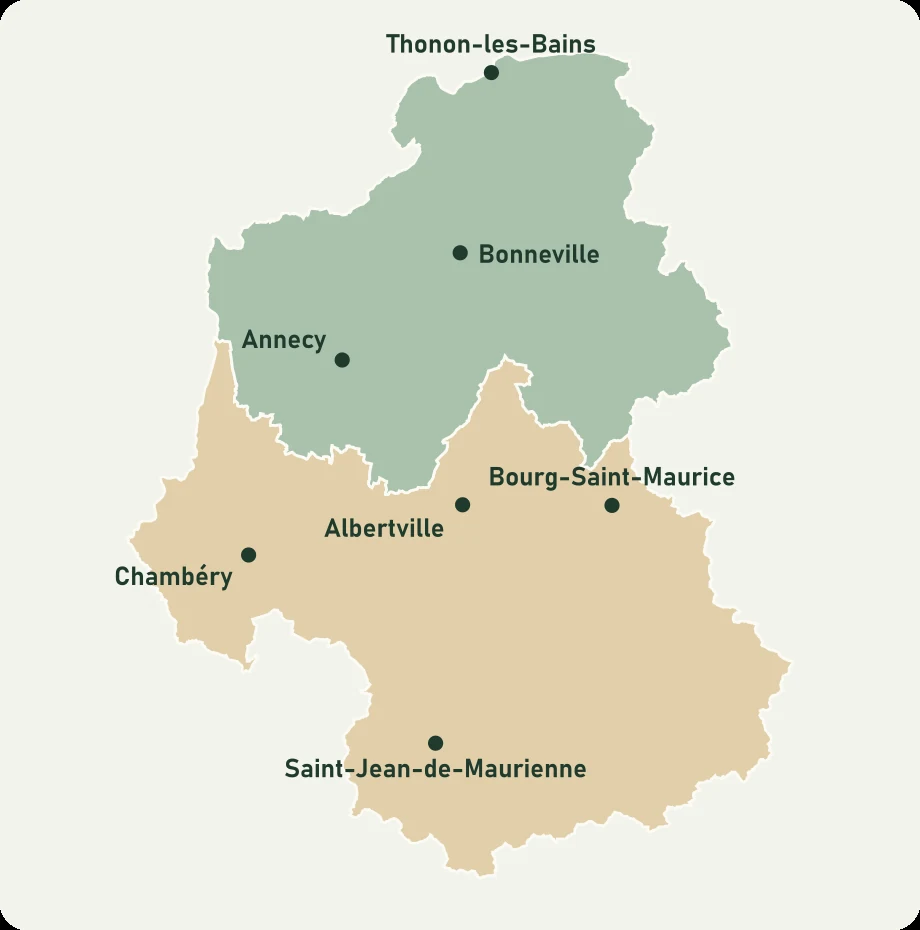
Alandier’s Savoy Food and Terroir Guide covers local produce, producers and crafts in the French departments of Savoie and Haute-Savoie. It helps readers recognise regional specialities, understand how they are shaped by where they are made, and plan a visit. From Alpine cheeses and hillside wines to cured meats, orchards and markets, it shows what to look for, what to taste and where to meet the people who keep these traditions alive.
What shapes Savoy’s terroir?
Terroir takes shape where a place meets the knowledge and practices of the people who work there. In the mountains, the terrain and the seasons affect where and when herds graze. In the vineyards, soil, slope and exposure influence which plots are planted and how the vines are tended. Farmers, winemakers, cheesemakers and other craftspeople pass on methods of producing, processing and preserving food that give regional specialities their character.
The local cooperative dairies, known as fruitières, are a good example. Farmers pool their milk to make cheese, including large wheels that require a substantial volume. This tradition is part of the history of Alpine villages, and some of the cooperatives are open to visitors today.
Which specialities should visitors look for?
- Cheese. Savoy’s cheese association brings together 8 cheeses with protected names, including 5 PDOs and 3 PGIs. Beaufort, Reblochon and Chevrotin show how different methods produce cheeses for both the cheeseboard and the kitchen.
- Cured meats and local cooking. When buying a slice of dry-cured ham or a piece of dry sausage, ask where the meat comes from and where it was matured or dried. Crozets, the local small square pasta, and sausages known as diots offer another way into Savoy’s cooking traditions.
- Fruit and seasonal produce. Pommes et Poires de Savoie PGI apples and pears are one example of a product rooted in local orchards. At the market, variety, season and origin are also good guides when choosing vegetables, fruit, honey or small-batch preserves.
- Wine and other drinks. The Savoy wine association’s 2025 brochure records 22 grape varieties. Jacquère, grown in Apremont, is a good starting point for dry whites. Among the regional spirits, try asking who makes génépi and where it is produced.
What does the label tell you?
A PDO ties every stage of production, processing and preparation to a defined area. A PGI links at least one stage to the area, along with a quality, reputation or other characteristic of the product. France’s Label Rouge identifies a higher level of quality than that of similar products normally on sale. At a stall, the registered name and the origin information can also help distinguish where the product was made from where its ingredients came from.
Meet producers and see how things are made
On a farm visit, visitors can meet farmers and learn how milk is produced. A cooperative dairy shows how that milk is turned into cheese. A maturation cellar shows what happens to the cheese as it ages. Markets, fairs and village festivals also bring local food makers and recipes together. At a restaurant, asking who supplied an ingredient can reveal a short supply chain.
To connect tasting with local history, a visit to the Vine and Wine Museum in Montmélian makes a good addition to a trip through the vineyards. For cooking or putting together a tasting at home, the guides to Savoy cheeses offer advice on choosing, storing and pairing cheese.
Plan a food and drink outing
| What to do | Where to start | Guide |
|---|---|---|
| Choose a cheese | Compare textures, uses and protected names | Savoy cheeses |
| Learn how the products are made | Follow the story from Alpine pastures to dairies and cellars | History of Savoy cheeses |
| Put together an aperitif | Pair a cheese with a cured meat | Cheese and charcuterie pairings |
| Explore local wines | Start with a pairing and choose a wine-growing area | Savoy cheese and wine pairings |
| Visit a producer | Choose a farm, cooperative dairy or cellar in one area | Savoy Cheese Route |
For cheese visits, the Bauges, the Aravis and the Beaufortain make good starting points. The Combe de Savoie and the hillsides around Chignin show another side of the landscape through its vineyards. Sticking to one area for half a day leaves time to look around and talk to producers. Confirm opening hours, booking requirements and tasting options with the place you plan to visit.
For a different wine route, head from Lac du Bourget towards Chautagne and Jongieux, or choose the route linking Lake Geneva and the Arve Valley in Haute-Savoie.
Questions about the Savoy Food and Terroir Guide
What can a Savoy terroir guide help with?
It helps readers choose local specialities, understand their origins and plan a meeting with a producer or a visit to a farm, cooperative dairy or cellar.
Which areas does the guide cover?
It focuses on the French departments of Savoie and Haute-Savoie. A protected name or an itinerary may have its own geographic area. Check the relevant guide for details.
How can you tell if a product comes from Savoy?
Check its full name, place of production and any official mark on the label. For a processed product, ask where the ingredients came from and where they were processed.
How do you plan a first visit to a producer?
Choose an area close to where you are staying, then pick a stop that accepts visitors. Check opening hours, production or tasting days, and whether you need to book.
Where can you buy specialities and meet their makers?
Start with farm shops, cooperative dairies, wineries that welcome visitors and producers’ markets. At the market, ask who made the cheese or cured meat, or who grew the fruit.